Soundboard Scholar

A Peer-Reviewed Journal of Guitar Studies

Current Issue

Volume 10, Issue 1 (2025)Read More

Current Articles

Articles26 July 2025

Picturing the Victorian Revival of the Guitar: The Diary of Caroline Maud Berkeley (1859–1949)

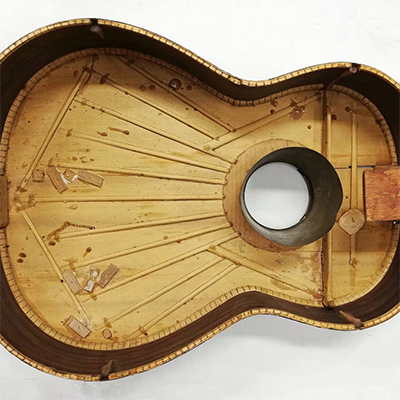
The diary of Caroline Maud Berkeley née Tomlinson, compiled in thirteen sketch books from 1888 to 1901, offers the most extensive social record of guitar-playing to be found in any private document of the nineteenth century. This article, compiled with exclusive access to the original manuscripts, offers the first comprehensive digital record of more than twenty scenes of guitars in use, together with the accompanying diary text, which has never before been published in an authentic form. The diarist’s sharp eye for facial expressions and gestures, her radiant sense of color, and her keen sense of humor allow her to reveal, in a manner both incisive and engaging, the importance of guitar-playing in her life at the seaside resort of Sandown, on the Isle of Wight, just off the south coast of England. The guitar offered her a portable means to accompany her own amateur singing and the chance to share an interest with several young women who lived very close to her, for to Maud Tomlinson the guitar meant song, friendship and independence above all things. In text and image, the diary traces her activities from the struggles of her first lessons through to the assured public performances with a guitar trio that gave her quite as many opportunities to escape the parental home as her tennis racket and the bicycle she bought during the cycling craze of the 1890s. Above, all, the diary offers a uniquely vivid record of a revival of the guitar at precisely the time when the instrument is often supposed to have been on the verge of oblivion in Britain.
Articles8 August 2025

Ferdinand Rebay and the Sonata Paradigm

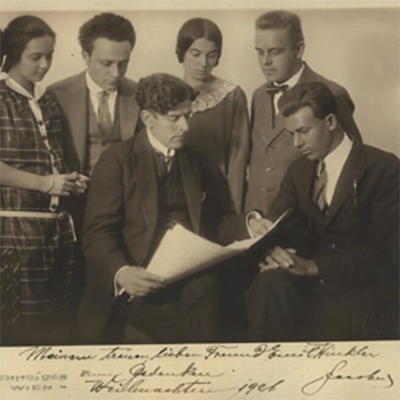
With an output of over thirty sonatas or sonata-structured works, Viennese composer Ferdinand Rebay (1880–1953) may be considered among the most significant composers of guitar sonatas; as yet, however, little has been written to place Rebay’s sonatas in historical context. Departing from a review of a guitar concert held in Vienna in 1925, which clearly indicates a shift in the perception of the instrument’s role and capabilities among mainstream audiences, I begin this investigation exploring the guitar club environment in German-speaking territories around the turn of the century, with a focus on the activities of the IGV (Internationale Gitarristenverband; International Association of Guitarists). Equally important was the implementation of the guitar curriculum at the Wiener Musikakademie in 1923 by Jakob Ortner (1879–1959), because it opened a window for chamber music collaboration and attracted the interest of non-guitarist composers such as Rebay. I highlight the role of Rebay’s niece, guitarist Gerta Hammerschmid (1906–1985), as an advocate for her uncle’s music—speculating, however, that her controlling attitude may have limited Rebay’s music from reaching beyond its Viennese sphere. After examining the constructed values of the post-Beethoven sonata and its domestic ramifications in the nineteenth century, I delve into Rebay’s extensive collection of sonatas, especially those for chamber music ensembles, and discuss its reception among Viennese musicians and critics alike. A final section outlines some of the main characteristics of Rebay’s sonatas by providing a structural overview of a significant subset—namely, the six sonatas for woodwind instruments and guitar—and demonstrating their connections to the Romantic amateur chamber sonata.
Articles16 November 2025

A Lost Culture of Touch and Sound: The Contribution of Visually Impaired Musicians to the Evolution of the Spanish Guitar

In the story of music-making, blind musicians have played an intrinsic role, helping to drive the development not only of musical styles but also of instruments, instruction, and aesthetics. Many musical practices were cultivated first within blind communities and adopted only later by sighted musicians, often with a gradual erasure of their original context. The history of the Spanish guitar offers a compelling case study of this progression, demonstrating how the contribution of blind musicians could be both wide-reaching and yet, over time, forgotten. The history of this contribution is challenging to recover, for in Spain as elsewhere, blind musicians left almost no direct historical evidence of their activities; and yet, once reconstructed, it offers a vital new perspective, one that challenges standard approaches to guitar historiography, with its traditional emphasis on repertoire and celebrated individuals. Rather than belonging to the margins of guitar history, the work of blind Spanish guitarists has direct implications for its central narrative. It is essential for understanding the emergence of the Spanish classical guitar in the 19th century and for situating pivotal figures—such as Francisco Tárrega, Antonio de Torres, and even Andrés Segovia and Agustín Barrios—within a broader cultural context in which blind musicians played a vital role. Furthermore, this perspective may offer valuable insights into the study of Spanish musical pedagogy and aesthetics, particularly the concept of duende—as well as into the organological development of the guitar.

Most Popular Articles

Front Matter
29 December 2021

Soundboard Scholar no. 7 (Complete)

This PDF is a compilation of all articles from Soundboard Scholar no. 7, provided for convenience. Please visit https://digitalcommons.du.edu/sbs/vol7/iss1/ for individual PDFs, which should be used for citation. This PDF was updated on March 4, 2022 to include Robert Ferguson's obituary of Thomas Heck.
Read More
Articles
7 January 2022

Guitar Thinking

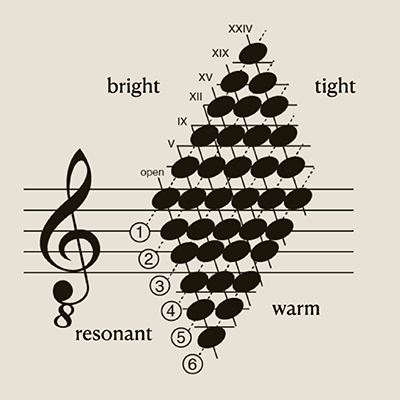
Playing the guitar develops physical skills but also ways of listening and thinking about music. For example, guitarists often conceptualize chords as two-dimensional shapes—an approach that is foreign to pianists. What does it mean, then, to think like a guitarist? This article approaches “guitar thinking” through music theory and cognitive science. Psychological experiments help to reveal auditory, visual, and tactile aspects of guitar playing and to show how guitarists respond to the instrument’s affordances (i.e., its possibilities for action). Additionally, recent research in music theory models fretboard space and examines patterns of body-instrument interaction. To demonstrate this mode of analysis, the article discusses Leo Brouwer’s Estudios sencillos, nos. 1 and 7. Ultimately, this investigation suggests that the guitar is not only a tool for producing musical sound; it also produces musical knowledge.
Read More
Articles
1 January 2016

Henry Worrall (1825–1902): Anglo-American Guitarist

Anglo-American guitarist Henry Worrall appeared on the American scene just as the guitar reached a plateau of popularity. As vital as the guitar itself, the prevailing social, philosophical, and aesthetic tenets of Worrall's era also wove a unifying thread through his life, career, and oeuvre. His immersion in both the graphic and musical arts; his straddling of vernacular and high culture; his connection to nature and especially agriculture; his nationalist and regionalist sympathies; and his fondness for folk, popular, and heroic musical themes all drew from and evinced a Romantic worldview. Here, Ferguson discusses Worrall's professional life.
Read More
From the Archive
31 December 2021

The Guitar in Nineteenth-Century America: A Lost Social Tradition

This article is one of a series of five by Peter Danner on the history of the guitar in the United States from the late eighteenth to the early twentieth century. Written between 1977 and 1994, these articles first appeared in early issues of the GFA’s magazine Soundboard. They are reprinted here in tribute to Danner’s pioneering contribution to guitar research and to bring them to the attention of a new generation of scholars. The author has generously provided a newly written introduction to the series.
Read More
Articles
1 January 2017

Andrés Segovia’s Unfinished Guitar Method: Placing His “Scales” in Historical Context

For over sixty years, guitarists of my generation have been familiar with the so-called Segovia Scales--the systematic scale fingerings advocated by the Andalusian maestro. They have been an influential--some might say a definitive--bestseller since their first USA publication in 1953. Countless guitar students have incorporated them into their daily practice routines. For the publisher, Columbia Music Co., they seem to be the goose that laid the golden egg. Are they everything that Segovia wanted them to be? Two books of recent date on guitar technique attest to their enduring value and relevance. Thomas Offermann wrote in 2015: "The fingerings of the scales used here mostly correspond to those of Andrés Segovia." revised edition of the 1953 publication came out in 1967. It was republished in 2011 and has remained in print. The original preface by Segovia was partly removed and replaced by a "Historical Note" by Thea E. Smith, the granddaughter of the publisher, Sophocles Papas. She attested that they were "one of the best-selling guitar publications of all time.
Read More
By Invitation
31 December 2021

On the Need for a Scholarly Edition of Tárrega’s Complete Works

In this guest editorial, the author provides evidence of the unreliable nature of the majority of Tárrega’s first editions, and the substandard quality of most modern editions. The author argues that in light of the recent availability of formerly inaccessible primary sources, the time is right for a scholarly edition of Tárrega’s complete works with state-of-art editorial methods.
Read More

Readership Activity