

The Ricks Center for Gifted Children at the University of Denver is pleased to present a series of integrated curriculum units designed for teachers of gifted elementary and middle school students. The units are intended to provide rich, in-depth experiences for learners by focusing on a particular topic.
An integrated curriculum is an instructional approach that connects the disciplines to an underlying theme or topic. Immersing students in an integrated-thematic unit provides the backdrop for experiences to occur across the disciplines. Shaping coursework around integrated themes is especially appropriate for gifted students, however using an integrated-thematic curriculum is appropriate for all learners as it develops students' abilities to make connections, to solve problems by looking at multiple perspectives, and to integrate information from different fields of experience. An integrated-thematic curriculum permits students to be active participants in their own learning as they design their own explorations and take ownership of their achievements. Students become active, enthusiastic, life-long learners.
This series may be cited using: https://doi.org/10.56902/RicksCU.0
-
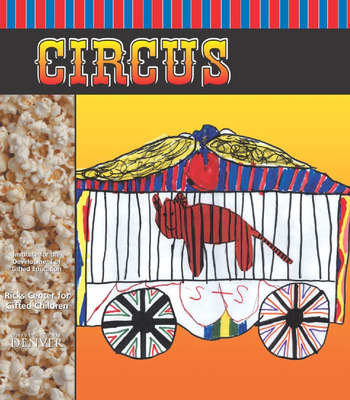
Circus: An Integrated Curriculum Unit
Institute for the Development of Gifted Education, Ricks Center for Gifted Children, University of Denver
An integrated curriculum is an instructional approach that connects the disciplines to an underlying theme or topic. Immersing students in an integrated-thematic unit provides the backdrop for experiences to occur across the disciplines. Shaping coursework around integrated themes is especially appropriate for gifted students, however using an integrated-thematic curriculum is appropriate for all learners as it develops students' abilities to make connections, to solve problems by looking at multiple perspectives, and to integrate information from different fields of experience. An integrated-thematic curriculum permits students to be active participants in their own learning as they design their own explorations and take ownership of their achievements. Students become active, enthusiastic, life-long learners.
In the Circus Unit, students are exposed to concepts such as human-animal relationships, animal ethics, world cultures, circus culture, advertisement and marketing, and the science of circus acts.
-
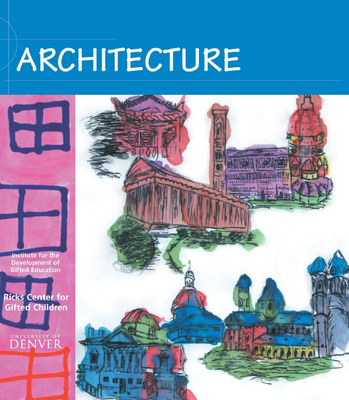
Architecture: An Integrated Curriculum Unit
Institute for the Development of Gifted Education, Ricks Center for Gifted Children, University of Denver
An integrated curriculum is an instructional approach that connects the disciplines to an underlying theme or topic. Immersing students in an integrated-thematic unit provides the backdrop for experiences to occur across the disciplines. Shaping coursework around integrated themes is especially appropriate for gifted students, however using an integrated-thematic curriculum is appropriate for all learners as it develops students' abilities to make connections, to solve problems by looking at multiple perspectives, and to integrate information from different fields of experience. An integrated-thematic curriculum permits students to be active participants in their own learning as they design their own explorations and take ownership of their achievements. Students become active, enthusiastic, life-long learners.
In the Architecture Unit, students are exposed to concepts such as how nature inspires human-built architecture, the rich and diverse styles of architecture found around the world and across time, and the forces that influence the structural integrity of a building.
-
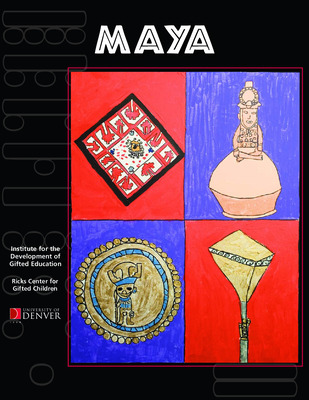
Maya: An Integrated Curriculum Unit
Institute for the Development of Gifted Education, Ricks Center for Gifted Children, University of Denver
An integrated curriculum is an instructional approach that connects the disciplines to an underlying theme or topic. Immersing students in an integrated-thematic unit provides the backdrop for experiences to occur across the disciplines. Shaping coursework around integrated themes is especially appropriate for gifted students, however using an integrated-thematic curriculum is appropriate for all learners as it develops students' abilities to make connections, to solve problems by looking at multiple perspectives, and to integrate information from different fields of experience. An integrated-thematic curriculum permits students to be active participants in their own learning as they design their own explorations and take ownership of their achievements. Students become active, enthusiastic, life-long learners.
In the Maya Unit, students are exposed to concepts such as how geographic isolation, exploration and European settlement and rule affected an indigenous cultural group.
-
Where I Belong
Institute for the Development of Gifted Education, Ricks Center for Gifted Children, University of Denver
Interviews with educators, parents, and students at the Ricks Center for Gifted Children on educational methodology and its impact in the lives of its students.
-
Incidental Illuminations and Inspirations: Creativity Quotes for the Inquisitive
Institute for the Development of Gifted Education, Ricks Center for Gifted Children, University of Denver and Rivian Segal Bass
A set of inspirational creativity cards for gifted learners.
-
Larry Math Cards
Larry Hillman and Institute for the Development of Gifted Education, Ricks Center for Gifted Children, University of Denver
Larry Hillman - teacher, mentor, and mathematician, was the creator of the mathematical problems found within the Institute for the Development of Gifted Education's publication, Larry Math Cards. Larry taught at the middle school level at the Ricks Center for Gifted Children on the University of Denver campus from 1999 until his death in 2002. He was passionate about teaching gifted learners and his students knew him to be a uniquely brilliant scholar and a stimulating educator. He enlightened their understanding of mathematics as his questions challenged their assumptions and his encouragement fueled their ambitions.
Larry loved joining his students and designed activities that allowed him to not only oversee their learning, but also actively participate in it. Larry Math Cards embody his approach. They present problems that he developed across mathematical disciplines to be solved collaboratively, and with openness to disparate strategies and viewpoints. The Institute for the Development of Gifted Education honors Larry with the publication of Larry Math Cards, which serve to share his genius for engaging and provoking learners as well as bringing his methods to educators in the field of Gifted Education.
-
Mosaic: Exploring Patterns in Literature: Volume 2: Virtual Voyages
Institute for the Development of Gifted Education, Ricks Center for Gifted Children, University of Denver
Virtual Voyages is an integrated thematic unit developed to weave together the academic strands of geography and literature into a single curriculum that fosters appreciation, awareness, and understanding of cultures around the world. The individualized research format meets the needs of gifted students to work within a particular area of passion, to work at an individualized pace, and to work with depth and breadth on projects that especially engage their interests.
-
Mosaic: Exploring Patterns in Literature: Volume 1: Faerie Tales
Institute for the Development of Gifted Education, Ricks Center for Gifted Children, University of Denver
This curriculum was born from a true love of the magic of words and the passion that gifted students display for exploring the wondrous world of fantasy. The reading was designed to highlight the elements of traditional faerie tales in stories that engage students and inspire them to create their own miraculous stories. Each literature project was specially created to motivate students to demonstrate in-depth understanding of these specific novels and to facilitate their perception of the elements of faerie tales as a distinct genre. The writer's guide directs students through the steps of composing an original faerie tale.
-
United Nations: A Social Studies and Literature Simulation
Institute for the Development of Gifted Education, Ricks Center for Gifted Children, University of Denver
So much of education is about inspiration. As teachers and learners, all things poetic, justified, important and meaningful inspire us to be the best people we can be, active and fair in a world changing at awesome speeds and in sometimes, unimaginable ways. This curriculum for gifted learners' grade 5-8, was designed out of a sense of authentic inspiration around just the conceptual magnitude of the phrase, United Nations. Also written about, around, and in response to the events of September 11, 2001, this curriculum reflects only one of the ways in which the field of education has responded to this and other times of tragedy and conflict.
The unit is interdisciplinary, providing learners with a holistic and meaningful experience. It was written with great consideration for the disciplines with topics and lessons enmeshed from the fields of social psychology, sociology, political science and human communications, to name but a few.
-
Early Childhood Thematic Unit: A 32-Week Curricular Resource: Fairy Tales - Insects - Dinosaurs
Institute for the Development of Gifted Education, Ricks Center for Gifted Children, University of Denver
An integrated curriculum is an instructional approach that connects the disciplines to an underlying theme or topic. Immersing students in an integrated-thematic unit provides the backdrop for experiences to occur across the disciplines. Shaping coursework around integrated themes is especially appropriate for gifted students, however using an integrated-thematic curriculum is appropriate for all learners as it develops students' abilities to make connections, to solve problems by looking at multiple perspectives, and to integrate information from different fields of experience. An integrated-thematic curriculum permits students to be active participants in their own learning as they design their own explorations and take ownership of their achievements. Students become active, enthusiastic, life-long learners.
There are three major topics covered in the Early Childhood Thematic Units book. The topics that are included are those that are generally of high developmental interest to young learners. Additionally, they are topics that allow for high-level conceptual development. In the case of the Dinosaur unit, children are exposed to larger concepts such as the passage of time and a changing physical environment.
-
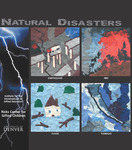
Natural Disasters: An Integrated Curriculum Unit, Grades 3-5
Institute for the Development of Gifted Education, Ricks Center for Gifted Children, University of Denver
An integrated curriculum is an instructional approach that connects the disciplines to an underlying theme or topic. Immersing students in an integrated-thematic unit provides the backdrop for experiences to occur across the disciplines. Shaping coursework around integrated themes is especially appropriate for gifted students, however using an integrated-thematic curriculum is appropriate for all learners as it develops students' abilities to make connections, to solve problems by looking at multiple perspectives, and to integrate information from different fields of experience. An integrated-thematic curriculum permits students to be active participants in their own learning as they design their own explorations and take ownership of their achievements. Students become active, enthusiastic, life-long learners.
In the Natural Disasters Unit, students are exposed to concepts such as the interrelationships between natural phenomena, human impact and living things, ever-changing climatic patterns and storm systems, effects of technology on weather prediction, and community response to disaster.
-
Passion Pursuits: A Guide to Independent Student Learning
Institute for the Development of Gifted Education, Ricks Center for Gifted Children, University of Denver
Passion Pursuits is designed as differentiated enrichment for gifted learners. Integrated across several content areas, Passion Pursuits offer opportunities for reading, research, writing, and the creation of a variety of products. When used in a pullout setting where learners come together for a period of time each day or each week, some of the activities and lessons may be done independently outside of school. When used in a home school setting, field experiences may dominate the research section of the unit and greater lengths of time may be allocated to each project, allowing for expansion and complexity in both concepts and product. In a general classroom setting, Passion Pursuits may be used as center-type enrichment, as a designated class time for all students once or twice a week, or as a month long research skill curriculum focus.
-
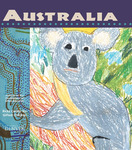
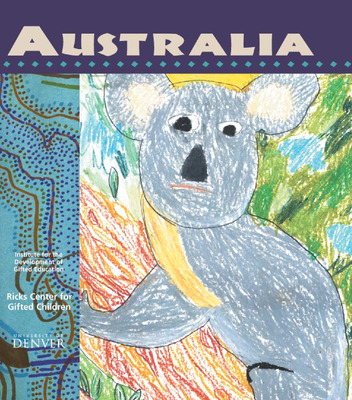
Australia: An Integrated Curriculum Unit, Grades 2-4
Institute for the Development of Gifted Education, Ricks Center for Gifted Children, University of Denver
An integrated curriculum is an instructional approach that connects the disciplines to an underlying theme or topic. Immersing students in an integrated-thematic unit provides the backdrop for experiences to occur across the disciplines. Shaping coursework around integrated themes is especially appropriate for gifted students, however using an integrated-thematic curriculum is appropriate for all learners as it develops students' abilities to make connections, to solve problems by looking at multiple perspectives, and to integrate information from different fields of experience. An integrated-thematic curriculum permits students to be active participants in their own learning as they design their own explorations and take ownership of their achievements. Students become active, enthusiastic, life-long learners.
In the Australia Unit, students are exposed to concepts such as the impact of climate on wildlife, geographic isolation, immigration and settlement, Australian culture, and Indigenous Australian culture.
-
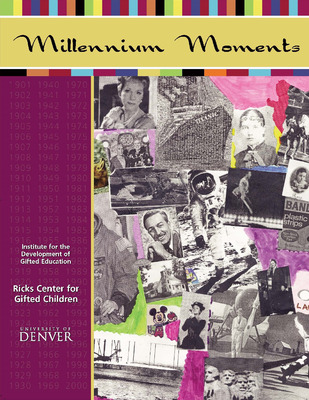
Millennium Moments: An Integrated Literature Unit
Institute for the Development of Gifted Education, Ricks Center for Gifted Children, University of Denver
As we begin the new millennium, with its recent challenges and complexities, many educators are looking back to the twentieth century as a rich source of subject matter for their students to investigate. Further, most state standards call for an exploration of "modern" history. Certainly, there are numerous curricular materials that provide historical summaries of the century. Indeed, Millennium Moments is best used in conjunction with resources that chronicle modern world history and provide contextual information. It is our hope that this interdisciplinary unit will serve to engage students firsthand in the discoveries, personalities, accomplishments, and cultural events of the twentieth century and to motivate them to make a personal connection with the past.
-
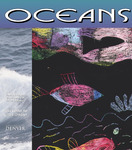
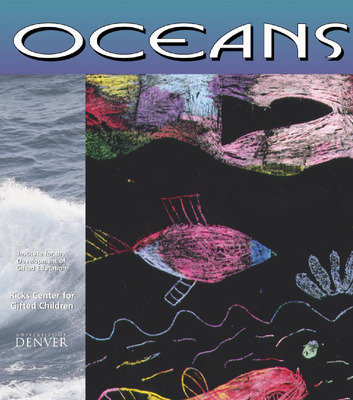
Ocean: An Integrated Curriculum Unit
Institute for the Development of Gifted Education, Ricks Center for Gifted Children, University of Denver
An integrated curriculum is an instructional approach that connects the disciplines to an underlying theme or topic. Immersing students in an integrated-thematic unit provides the backdrop for experiences to occur across the disciplines. Shaping coursework around integrated themes is especially appropriate for gifted students, however using an integrated-thematic curriculum is appropriate for all learners as it develops students' abilities to make connections, to solve problems by looking at multiple perspectives, and to integrate information from different fields of experience. An integrated-thematic curriculum permits students to be active participants in their own learning as they design their own explorations and take ownership of their achievements. Students become active, enthusiastic, life-long learners.
In the Ocean Unit, students are exposed to concepts such as humans' relationship and responsibilities to the ocean, or the mysteries of the ocean and how it is the largest portion of the earth that has yet to be fully explored.
-
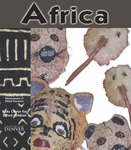
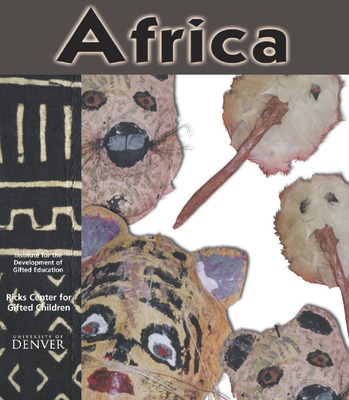
Africa: An Integrated Curriculum Unit, Grades 2-4
Institute for the Development of Gifted Education, Ricks Center for Gifted Children, University of Denver
An integrated curriculum is an instructional approach that connects the disciplines to an underlying theme or topic. Immersing students in an integrated-thematic unit provides the backdrop for experiences to occur across the disciplines. Shaping coursework around integrated themes is especially appropriate for gifted students, however using an integrated-thematic curriculum is appropriate for all learners as it develops students' abilities to make connections, to solve problems by looking at multiple perspectives, and to integrate information from different fields of experience. An integrated-thematic curriculum permits students to be active participants in their own learning as they design their own explorations and take ownership of their achievements. Students become active, enthusiastic, life-long learners.
In the Africa Unit, students are exposed to concepts such as how the physical environment influenced the development of traditional African cultures, the enormously rich and diverse cultures found on a single continent, and the impact of ever-changing weather patterns on land, animals and people.
-
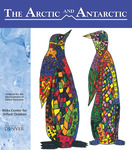
The Arctic and Antarctic: An Integrated Curriculum Unit, Grades K-2
Institute for the Development of Gifted Education, Ricks Center for Gifted Children, University of Denver
An integrated curriculum is an instructional approach that connects the disciplines to an underlying theme or topic. Immersing students in an integrated-thematic unit provides the backdrop for experiences to occur across the disciplines. Shaping coursework around integrated themes is especially appropriate for gifted students, however using an integrated-thematic curriculum is appropriate for all learners as it develops students' abilities to make connections, to solve problems by looking at multiple perspectives, and to integrate information from different fields of experience. An integrated-thematic curriculum permits students to be active participants in their own learning as they design their own explorations and take ownership of their achievements. Students become active, enthusiastic, life-long learners.
In the Circus Unit, students are exposed to concepts such as the role of scientific discovery, specific ecological systems, the development of culture in response to a polar physical environment, and exploration.
-
First Things First: A Collection of Fifty Circle Discussion Topics
Brian Michael Weaver and Institute for the Development of Gifted Education, Ricks Center for Gifted Children, University of Denver
A collection of thought-provoking discussion topics for gifted middle school students. Each card asks questions around a broad theme.